Monday, 12 December 2016

Thursday, 1 December 2016
Costume/Colour Research


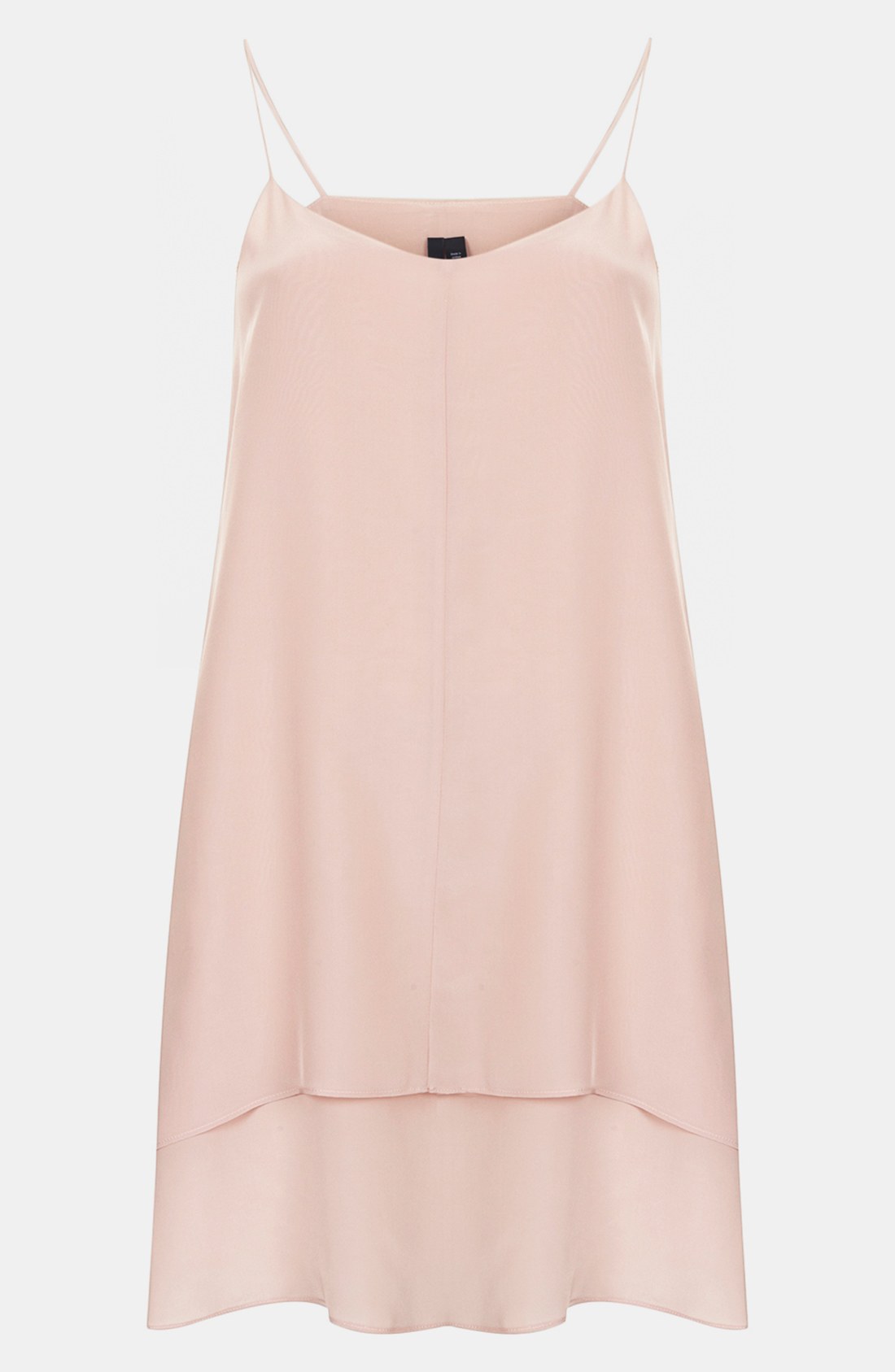
The main character will be wearing the colour pink throughout the film. This is to connote her femininity, however the lightness of the colour connotes her innocence and purity, especially as it is often associated with little girls. It connotes love, the stalker's love for her, her love for others. More aspects of her personality, such as her charm or tenderness also come across in this colour.
Antagonist (Stalker):
The stalker will be wearing black throughout the film. This colour has connotations of power, death, evil, fear. It is often associated with the unknown (e.g. the darkness of night, black holes) and our instinctual fear of this. Often it has negative connotations.
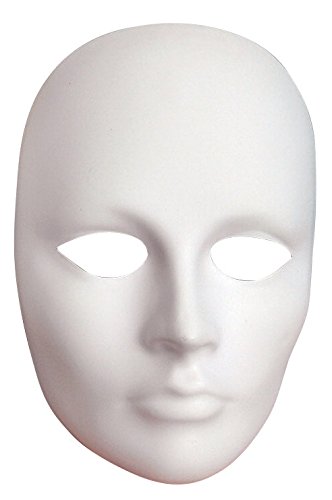
We have decided to dress the victim in a nightgown, because it suggests a vulnerability and innocence as we are at our most vulnerable when we are asleep. It also brings in elements of the night and the unknown, also represented in the black clothing of the stalker. The mask hides their true identity which again plays on the fear of the unknown, and the idea that it is plain white suggests that they are faceless, that they have no identity and are in a way sub-human.

Some existing characters within this genre that use costume effectively:
 |
 Her femininity and innocence is shown through the use of colour in Black Swan. This is increased by the dancers in black at the end of the hallway.
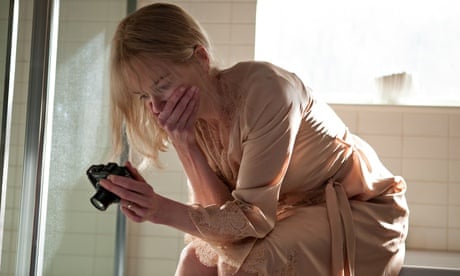
In Before I Go To Sleep, the victim' s vulnerability is shown by her pale, neutral-toned dressing gown.
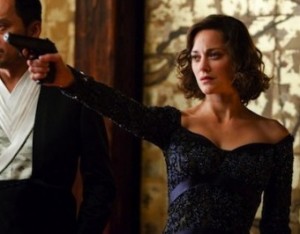
In Inception, Mal, the villain, is dressed in all black.
Wednesday, 30 November 2016
Opening Sequence Analysis: Mise-en scene, shot types, angles and editing
Firstly, the opening sequence beings in a small, well-lit room. The set is perfectly symmetrical, suggesting to the audience that it might not be reality. The light is golden, and the costume suggests opulence as well as the decoration of the set itself. The table is reflective, creating an almost unsettling symmetry within the frame, further suggesting to the audience that it could be a dream. It also connotes introspectiveness as the characters reflect upon themselves, a common theme within the psychological thriller genre. A number of other conventions from this genre are used also, for example the dark formal costumes and props with semiotic connotations of threat, danger and mystery (the guns, the letter, the safe). From the setting, the audience can assume that the narrative is taking place somewhere in East Asia, such as China or Japan. This engages the audience because the exotic setting is unfamiliar and therefore interesting to American/British audiences. It is also symbolic of the human mind and turmoil, which fits nicely into the overarching narrative of the film. Similarly, the Art Deco styling and Jazz Era mise-en-scene reinforce the idea of a 'dreamscape' because this style connotes desire, lust and seductiveness. The multiple staircases suggests layered meanings and dreams, a complexity to the narrative.
The extreme close up of the watch suggests that timing is an important aspect of the film, and alludes to the narrative. Extreme close ups also reinforce the psychological nature of the film. The slowed and enhanced diegetic ticking sound effect without music further highlights the importance of the passage of time. It is used to signify a switch between the dream and what the audience thinks is reality. The change is drastic and the two scenes contrast each other: the low-key, shadowy lighting to evoke enigma and mystery, the relative peace of the dream world vs. the violence of reality. Explosions in the street (conventions of an action film to engage fans of this genre) and the grimy flat where they sleep suggest that it is real, with natural lighting to add realism. The editing remains fast-paced throughout the whole sequence and heavily stylised to contribute to the feeling of detachment from reality in the dream locations-- they are a settings that each represent a specific aspect of the human mind.
In our own opening sequence, we could use setting to show the characters' mental state, e.g. a messy room for a disorganised mind etc.
Firstly, the opening sequence beings in a small, well-lit room. The set is perfectly symmetrical, suggesting to the audience that it might not be reality. The light is golden, and the costume suggests opulence as well as the decoration of the set itself. The table is reflective, creating an almost unsettling symmetry within the frame, further suggesting to the audience that it could be a dream. It also connotes introspectiveness as the characters reflect upon themselves, a common theme within the psychological thriller genre. A number of other conventions from this genre are used also, for example the dark formal costumes and props with semiotic connotations of threat, danger and mystery (the guns, the letter, the safe). From the setting, the audience can assume that the narrative is taking place somewhere in East Asia, such as China or Japan. This engages the audience because the exotic setting is unfamiliar and therefore interesting to American/British audiences. It is also symbolic of the human mind and turmoil, which fits nicely into the overarching narrative of the film. Similarly, the Art Deco styling and Jazz Era mise-en-scene reinforce the idea of a 'dreamscape' because this style connotes desire, lust and seductiveness. The multiple staircases suggests layered meanings and dreams, a complexity to the narrative.
The extreme close up of the watch suggests that timing is an important aspect of the film, and alludes to the narrative. Extreme close ups also reinforce the psychological nature of the film. The slowed and enhanced diegetic ticking sound effect without music further highlights the importance of the passage of time. It is used to signify a switch between the dream and what the audience thinks is reality. The change is drastic and the two scenes contrast each other: the low-key, shadowy lighting to evoke enigma and mystery, the relative peace of the dream world vs. the violence of reality. Explosions in the street (conventions of an action film to engage fans of this genre) and the grimy flat where they sleep suggest that it is real, with natural lighting to add realism. The editing remains fast-paced throughout the whole sequence and heavily stylised to contribute to the feeling of detachment from reality in the dream locations-- they are a settings that each represent a specific aspect of the human mind.
In our own opening sequence, we could use setting to show the characters' mental state, e.g. a messy room for a disorganised mind etc.
Friday, 18 November 2016
Survey Results
Survey Results:
https://www.surveymonkey.com/results/SM-LBNVPWXN/


These are the results of our survey. We have decided to target females aged 15-19, so we sent the survey to people of this demographic in order to discover what they would like to see in a film of this genre. Because they are all 15 or above, this allows our film to have a BBFC certificate of 15, which will give us more freedom.
Most people's favourite genre was comedy, however we have decided to go with the second most popular, Thriller for two reasons: 1) comedy is a very broad genre, it would be difficult to narrow this down. 2) The conventions of the comedy genre are also significantly harder to identify and make use of.
We have decided to keep our main character female as the majority of people asked prefer female heroes, although the results were fairly close with a difference of only two people. However, most people prefer male villains-- we have also briefly considered having the villain also be female to subvert gender roles and create an element of surprise.
We also discovered that tension and excitement are what the majority of audiences are looking to feel when they watch a film. We will be mindful of this when creating our opening sequence, for example using lighting and sound to create suspense and tension, and keep the viewer engaged.
However, most people surveyed preferred a chronological narrative to a non-chronological narrative. As a group we will discuss changing our narrative to suit the audience-- conversely, most people surveyed also preferred a complex and challenging narrative. These two answers do not seem to match. Although they are not necessarily mutually exclusive, we were expecting most of the participants to answer with chronological/simple or non-chronological/complex,
A lot of people seemed to prefer a 'spy' narrative, however this does not fit into the psychological thriller genre well, so we decided to remain with our original idea of kidnapping, which was also the second most popular narrative arc.
In terms of psychographics, our audience will be intelligent and thrill-seeking, as the complex narrative and non-chronological plot are intellectually stimulating and the suspenseful, tense nature of the film would appeal to those who enjoy feeling scared while watching a film.
We will consider these results carefully when discussing and planning our film as a group, and use them in the focus groups that we have planned.
https://www.surveymonkey.com/results/SM-LBNVPWXN/


These are the results of our survey. We have decided to target females aged 15-19, so we sent the survey to people of this demographic in order to discover what they would like to see in a film of this genre. Because they are all 15 or above, this allows our film to have a BBFC certificate of 15, which will give us more freedom.
Most people's favourite genre was comedy, however we have decided to go with the second most popular, Thriller for two reasons: 1) comedy is a very broad genre, it would be difficult to narrow this down. 2) The conventions of the comedy genre are also significantly harder to identify and make use of.
We have decided to keep our main character female as the majority of people asked prefer female heroes, although the results were fairly close with a difference of only two people. However, most people prefer male villains-- we have also briefly considered having the villain also be female to subvert gender roles and create an element of surprise.
We also discovered that tension and excitement are what the majority of audiences are looking to feel when they watch a film. We will be mindful of this when creating our opening sequence, for example using lighting and sound to create suspense and tension, and keep the viewer engaged.
However, most people surveyed preferred a chronological narrative to a non-chronological narrative. As a group we will discuss changing our narrative to suit the audience-- conversely, most people surveyed also preferred a complex and challenging narrative. These two answers do not seem to match. Although they are not necessarily mutually exclusive, we were expecting most of the participants to answer with chronological/simple or non-chronological/complex,
A lot of people seemed to prefer a 'spy' narrative, however this does not fit into the psychological thriller genre well, so we decided to remain with our original idea of kidnapping, which was also the second most popular narrative arc.
In terms of psychographics, our audience will be intelligent and thrill-seeking, as the complex narrative and non-chronological plot are intellectually stimulating and the suspenseful, tense nature of the film would appeal to those who enjoy feeling scared while watching a film.
We will consider these results carefully when discussing and planning our film as a group, and use them in the focus groups that we have planned.
Thursday, 17 November 2016
Continuity Practice
Continuity Practice
This is a short sequence we filmed to practice editing. It focuses on continuity, and we took care to make sure that every time we refilmed a shot from a different angle (e.g the close up in the thumbnail of the video or the wideshot in the middle) that everything was consistent. We worked hard to edit the close up of the cup and the low angle shot that follows it together smoothly.
We had to refilm a few parts in the beginning because I did not start from the same place and my hair was different, but we learned to set clear markers at the beginning of filming to avoid this from happening again. This will be useful in making our opening sequence because it will help us to develop a sophisticated editing style that flows smoothly. It also means that we will avoid having to refilm parts of our opening sequence because of continuity errors.
This is a short sequence we filmed to practice editing. It focuses on continuity, and we took care to make sure that every time we refilmed a shot from a different angle (e.g the close up in the thumbnail of the video or the wideshot in the middle) that everything was consistent. We worked hard to edit the close up of the cup and the low angle shot that follows it together smoothly.
We had to refilm a few parts in the beginning because I did not start from the same place and my hair was different, but we learned to set clear markers at the beginning of filming to avoid this from happening again. This will be useful in making our opening sequence because it will help us to develop a sophisticated editing style that flows smoothly. It also means that we will avoid having to refilm parts of our opening sequence because of continuity errors.
Lighting Research
Lighting in Psychological Thrillers:
Low Lighting is the most commonly used type of lighting in Psychological Thrillers. The shadows create tension and suspense, and are good for subtly telling the audience about the character's intentions, e.g. a shaded face could indicate a villain.
However, we do not have any lighting equipment available to us, so we are working on ways in which we can recreate this while still making the film good quality. I am currently taking some practice shots to experiment with lighting in order to see discover the best method to achieve this low-key lighting.
 |
| The lighting in this scene from Psycho very clearly indicates the sinister nature of this character. |
 |
| Similarly, the lighting used in this scene signifies Mr Harvey's true nature. It is a way of giving the audience an insight into his character without explicitly stating his intentions. |
Low Lighting is the most commonly used type of lighting in Psychological Thrillers. The shadows create tension and suspense, and are good for subtly telling the audience about the character's intentions, e.g. a shaded face could indicate a villain.
However, we do not have any lighting equipment available to us, so we are working on ways in which we can recreate this while still making the film good quality. I am currently taking some practice shots to experiment with lighting in order to see discover the best method to achieve this low-key lighting.
Thursday, 13 October 2016
Genre Research
 Genre Research:
The Sixth Sense: Opening Sequence Analysis
The Sixth Sense: Opening Sequence Analysis
The target audience for the film The Sixth Sense demographically is white, middle class men and women aged 30-40. Psychographically, as the film is hinted to be complex, the target audience would want be completely engaged with the text and intellectually challenged. Additionally, they are likely to be aspirers according to Young and Rubicam’s audience theory.
The first frame— a close up of a bare lightbulb slowly turning on in the dark— immediately creates a tension and suspense, an eerie atmosphere. This prop is already beginning to imply the presence of ghosts, hinting at the narrative. The colours are all very cool-toned throughout the scenes in the cellar, creating a sense of unease, again implying something dark and supernatural. When the woman (Anna) enters wishing the first few seconds of the film, the camera is behind the wine rack, obscuring the audience’s view. it is almost as if the camera is hiding, giving the impression that she is being watched or is not alone, further adding to the theme of ghosts. Additionally, the way that the character shivers is also indicative of another presence, setting up the film’s main plot in the first few moments. Her costume is suggestive of wealth, therefore appealing to the middle and upper classes.
In the next frame, the audience sees a close up of various cards and letters from children, connoting innocence and creating a sharp contrast between the eeriness of the cellar and the happiness and safety of the lounge. A two-shot of Anna and her husband sitting next to each other follows, the warmth of the fire contrasting the cool tones of the cellar, and perhaps suggesting the comfort that Anna feels when she is with her husband and not alone. The fact that they sit only inches apart signifies a closeness on more than a physical level— she trusts him and finds comfort in his presence, no longer feeling the unease her facial expressions led the audience to believe she felt a few moments prior to this.
The next frame is the same shot but mirrored, with the focus being on Dr Crowe’s award and their reflections in it. The use of reflection suggests an introspectiveness, as often found within the psychological thriller genre, and appeals to those looking for intellectual stimulation as the deeper meaning is implied rather than explicitly stated. It also suggests the theme of identity and an inner conflict, a convention of the psychological thriller genre. This will appeal to existing fans of the genre, as it signifies that the film may use certain stock plots to characters that the audience knows they will enjoy. Perhaps the way that Anna is shifted to the side suggests that Malcolm puts everything aside for his work and for this award, including her. It could hint at this particular award being a source of conflict between husband and wife.
There is a wide shot from the staircase to show the mise-en-scène, connoting the main characters’ wealth, but it also again giving the impression that someone else is watching that shouldn’t be. As the characters are on the far left, the door in one of the main points of focus according tot he rule of thirds, suggesting that someone has already or is going to enter. The representation of the marriage is romantic and loving, appealing to aspirers as they seek out perfection in every aspect of their lives, including their relationships. The fact that the two main characters are both middle-aged and wealthy appeals to the target audience because they can see themselves within the characters, and the use of the award for the Dr’s dedication to his work suggests high intelligence, appealing to the audience’s psychographics.
The next frame is the beginning of the action, a smashed window from a point of view shot. We see the destruction from Anna’s perspective, putting the audience in her place to generate both sympathy and fear within the viewers. The low-key lighting creates an air of mystery, while the close ups of Anna and Malcolm’s face show their emotions: fear and confusion. This helps to engage the audience as they will empathise with the characters more. The way that Malcolm shields Anna from the danger suggests their closeness, and the fact that he is willing to risk harm to keep her safe. This again appeals to aspirers because of their loving relationship. However, women are represented as weak here, as Anna’s character hides behind and depends upon her husband to protect her, suggesting that women are incapable of taking care of themselves and fitting with the dominant hegemony in society. This also pushes Malcolm’s character into the Proppian hero role, and Anna into the role of the Proppian princess. This will appeal to men, particularly aspirers, as they will look up to his bravery and possibly even attempt to imitate it as suggested by Hypodermic Syringe Theory.
In the next shot, a new character is introduced. He is almost completely naked (to suggest his vulnerability and mental instability), and his facial expression signifies fear. For a moment, the audience may feel some sympathy towards him, but his shadowed face implies that he is a ‘bad’ character, in that he will harm the protagonist. He then brings the gun up and shoots Malcolm in the stomach, before the camera pans left and we hear the diegetic sound effect of the gun going off once more, leaving the audience to assume that he has committed suicide. Death is a common theme within psychological thrillers, appealing to existing fans of this genre. Despite this violence, the opening sequence finishes on a more enigmatic note, as in the next shot, the main character is completely unharmed, which is what pushes the film away from the horror/thriller category (despite the gore).
Overall, The Sixth Sense appeals successfully to its target audience by playing on the existing conventions in the psychological thriller genre whilst introducing enough new aspects to keep the audience engaged.
The ideas used in this opening sequence will influence our final product, such as costume to suggest social status and colour to signify certain emotions/atmospheres. Similar to the Sixth Sense, we intend to focus on the psychological aspects of the film rather than the gore to make it scary. Also, the clever use of framing to signify deeper meanings is something that I found interesting and plan to include when storyboarding and filming our own opening sequence.
The target audience for the film The Sixth Sense demographically is white, middle class men and women aged 30-40. Psychographically, as the film is hinted to be complex, the target audience would want be completely engaged with the text and intellectually challenged. Additionally, they are likely to be aspirers according to Young and Rubicam’s audience theory.
The first frame— a close up of a bare lightbulb slowly turning on in the dark— immediately creates a tension and suspense, an eerie atmosphere. This prop is already beginning to imply the presence of ghosts, hinting at the narrative. The colours are all very cool-toned throughout the scenes in the cellar, creating a sense of unease, again implying something dark and supernatural. When the woman (Anna) enters wishing the first few seconds of the film, the camera is behind the wine rack, obscuring the audience’s view. it is almost as if the camera is hiding, giving the impression that she is being watched or is not alone, further adding to the theme of ghosts. Additionally, the way that the character shivers is also indicative of another presence, setting up the film’s main plot in the first few moments. Her costume is suggestive of wealth, therefore appealing to the middle and upper classes.
In the next frame, the audience sees a close up of various cards and letters from children, connoting innocence and creating a sharp contrast between the eeriness of the cellar and the happiness and safety of the lounge. A two-shot of Anna and her husband sitting next to each other follows, the warmth of the fire contrasting the cool tones of the cellar, and perhaps suggesting the comfort that Anna feels when she is with her husband and not alone. The fact that they sit only inches apart signifies a closeness on more than a physical level— she trusts him and finds comfort in his presence, no longer feeling the unease her facial expressions led the audience to believe she felt a few moments prior to this.
The next frame is the same shot but mirrored, with the focus being on Dr Crowe’s award and their reflections in it. The use of reflection suggests an introspectiveness, as often found within the psychological thriller genre, and appeals to those looking for intellectual stimulation as the deeper meaning is implied rather than explicitly stated. It also suggests the theme of identity and an inner conflict, a convention of the psychological thriller genre. This will appeal to existing fans of the genre, as it signifies that the film may use certain stock plots to characters that the audience knows they will enjoy. Perhaps the way that Anna is shifted to the side suggests that Malcolm puts everything aside for his work and for this award, including her. It could hint at this particular award being a source of conflict between husband and wife.
There is a wide shot from the staircase to show the mise-en-scène, connoting the main characters’ wealth, but it also again giving the impression that someone else is watching that shouldn’t be. As the characters are on the far left, the door in one of the main points of focus according tot he rule of thirds, suggesting that someone has already or is going to enter. The representation of the marriage is romantic and loving, appealing to aspirers as they seek out perfection in every aspect of their lives, including their relationships. The fact that the two main characters are both middle-aged and wealthy appeals to the target audience because they can see themselves within the characters, and the use of the award for the Dr’s dedication to his work suggests high intelligence, appealing to the audience’s psychographics.
The next frame is the beginning of the action, a smashed window from a point of view shot. We see the destruction from Anna’s perspective, putting the audience in her place to generate both sympathy and fear within the viewers. The low-key lighting creates an air of mystery, while the close ups of Anna and Malcolm’s face show their emotions: fear and confusion. This helps to engage the audience as they will empathise with the characters more. The way that Malcolm shields Anna from the danger suggests their closeness, and the fact that he is willing to risk harm to keep her safe. This again appeals to aspirers because of their loving relationship. However, women are represented as weak here, as Anna’s character hides behind and depends upon her husband to protect her, suggesting that women are incapable of taking care of themselves and fitting with the dominant hegemony in society. This also pushes Malcolm’s character into the Proppian hero role, and Anna into the role of the Proppian princess. This will appeal to men, particularly aspirers, as they will look up to his bravery and possibly even attempt to imitate it as suggested by Hypodermic Syringe Theory.
In the next shot, a new character is introduced. He is almost completely naked (to suggest his vulnerability and mental instability), and his facial expression signifies fear. For a moment, the audience may feel some sympathy towards him, but his shadowed face implies that he is a ‘bad’ character, in that he will harm the protagonist. He then brings the gun up and shoots Malcolm in the stomach, before the camera pans left and we hear the diegetic sound effect of the gun going off once more, leaving the audience to assume that he has committed suicide. Death is a common theme within psychological thrillers, appealing to existing fans of this genre. Despite this violence, the opening sequence finishes on a more enigmatic note, as in the next shot, the main character is completely unharmed, which is what pushes the film away from the horror/thriller category (despite the gore).
Overall, The Sixth Sense appeals successfully to its target audience by playing on the existing conventions in the psychological thriller genre whilst introducing enough new aspects to keep the audience engaged.
The ideas used in this opening sequence will influence our final product, such as costume to suggest social status and colour to signify certain emotions/atmospheres. Similar to the Sixth Sense, we intend to focus on the psychological aspects of the film rather than the gore to make it scary. Also, the clever use of framing to signify deeper meanings is something that I found interesting and plan to include when storyboarding and filming our own opening sequence.
Survey Link
Survey Link:
http://www.surveymonkey.co.uk/r/GGRK6PD
A link to the survey we created for audience research.
http://www.surveymonkey.co.uk/r/GGRK6PD
A link to the survey we created for audience research.
Film Brief Video
Film Brief Video
In this video, we discuss initial ideas for our film's plot. This will develop over time.
Thursday, 6 October 2016
Psychological Thriller Mood Board

A collection of images for inspiration when planning and filming out opening sequence.
Tuesday, 4 October 2016
Editing and Filming Practice
Editing and Filming Practice:
Together we made a short sequence about a Kit-Kat Chunky as practice. Everyone took turns filming and editing.
It helped us practice planning skills with our storyboard and experiment with different shot types and angles. It also allowed us to figure out how Final Cut Pro works in order to be more efficient with it when working on our opening sequence.
To begin we used an medium close up to set the scene, paired with a time lapse to show the progression of time, followed by a close up of the Kit-Kat. We used an over the shoulder shot followed by a P.O.V. shot, which we planned in our storyboard. Variation of shot types was an important aspect of our planning. We used a tripod to film the majority of the shots, except from the P.O.V. shot. It allowed us to have a steadier camera, and therefore an overall more professional look. In terms of continuity we made a few mistakes, for example the distance that Leah walks to the table grows between edits, however we have learnt from this, and we will continue to develop our editing skills to prevent this from happening in the future.
Together we made a short sequence about a Kit-Kat Chunky as practice. Everyone took turns filming and editing.
It helped us practice planning skills with our storyboard and experiment with different shot types and angles. It also allowed us to figure out how Final Cut Pro works in order to be more efficient with it when working on our opening sequence.
To begin we used an medium close up to set the scene, paired with a time lapse to show the progression of time, followed by a close up of the Kit-Kat. We used an over the shoulder shot followed by a P.O.V. shot, which we planned in our storyboard. Variation of shot types was an important aspect of our planning. We used a tripod to film the majority of the shots, except from the P.O.V. shot. It allowed us to have a steadier camera, and therefore an overall more professional look. In terms of continuity we made a few mistakes, for example the distance that Leah walks to the table grows between edits, however we have learnt from this, and we will continue to develop our editing skills to prevent this from happening in the future.
Friday, 23 September 2016
Introduction to Brief
 Introduction to Brief: Swot Analysis of Brief
We have chosen to do the opening sequence brief.
S: STRENGTHS
W: WEAKNESSES
O: OPPORTUNITIES
T: THREATS
S: I have had editing experience, I took media at GCSE and therefore know terminology, we are able to choose any genre and think creatively.
W: I am unfamiliar with Final Cut Pro, I don't have much filming experience.
O: I will use the school equipment (e.g a tripod), opportunities to work independently from teacher, chance to think creatively, working collaboratively.
T: Working outside of school means that we can't ask for help, having unreliable group members, casting unreliable actors, not having a camera to work with if the school can't provide us with one.
Tuesday, 20 September 2016
About Me
About Me:
I studied media studies at GCSE and really enjoyed it, so I decided to take it for A-Level. The only experience I've had with making and editing films is for other school projects and what we have covered in Media so far-- but I also upload covers of songs to YouTube, which sometimes require editing although the changes are usually minimal.
I usually use iMovie, my preferred programme to edit with because it is simple and easy to navigate, although I have also used Windows MovieMaker in the past. I am currently learning how to use Final Cut Pro, an Apple software that is professionally used and has more options than other basic programs.
I have always enjoyed almost every type of media: television, films, TV-- even the occasional advert that made me laugh. I firmly believe that the future lies in media, with so much influence over audiences and so many current options as well as emerging technology. I think it's an important subject, especially because it applies to almost every aspect of our day-to-day lives. Media studies is something I would love to pursue even further than A-level.
- Favourite Film: Scott Pilgrim VS. The World // "He punched the highlight out of her hair!"
- Favourite Book: Practical Magic // "The moon is always jealous of the heat of the day, just as the sun always longs for something dark and deep."
- Favourite TV Show: Stranger Things // "Mornings are for coffee and contemplation."
- Favourite Game: Life is Strange // "Don't look so sad. I'm never leaving you."
Subscribe to:
Posts (Atom)